Cutting boards: plastic, wood and what antimicrobial means

The plastic-versus-wood argument for cutting boards has been running for decades and generates more heat than light. Both are used safely in professional kitchens. The useful distinctions are about knife edges, maintenance and what happens once the surface is heavily scored.
Plastic goes in the dishwasher, which is its main advantage
The ability to run a board through a hot dishwasher cycle is a genuine and significant hygiene benefit, particularly for raw meat.
Wood cannot do this, which is the strongest practical argument for having at least one plastic board.
Deep scoring is the real problem, in either material
A heavily scored board holds residue in cuts that washing struggles to reach. That applies to plastic and wood alike.
A board with deep grooves should be replaced, or in the case of wood, sanded flat. Scoring rather than material is what determines whether a board is still hygienic.
Wood is kinder to knife edges
Wood, particularly end-grain, lets the blade sink slightly rather than skidding across a hard surface, so edges stay sharp longer.
Hard plastic and especially glass or stone dull knives quickly. Glass boards are the worst offenders and are best avoided entirely.
Antimicrobial additives are a supplement, not a substitute
Boards treated with an antimicrobial agent inhibit growth on the surface between washes. That is a real but limited benefit.
It does not replace washing, and it does not make a scored board safe. Treat it as an extra rather than as a reason to clean less.
Separate boards for raw meat
Whatever material you choose, a dedicated board for raw meat and poultry is the single most effective hygiene measure. Colour coding makes it automatic.
This matters far more than the plastic-versus-wood question and is much easier to act on.
Wooden boards need drying and oiling; plastic needs replacing
Wood should be washed promptly, never soaked, dried standing up and oiled occasionally. Done properly it lasts many years and can be resurfaced.
Plastic requires no maintenance but has a shorter life, because once scored it cannot be restored. That is the honest trade between them.
Boards on this shelf
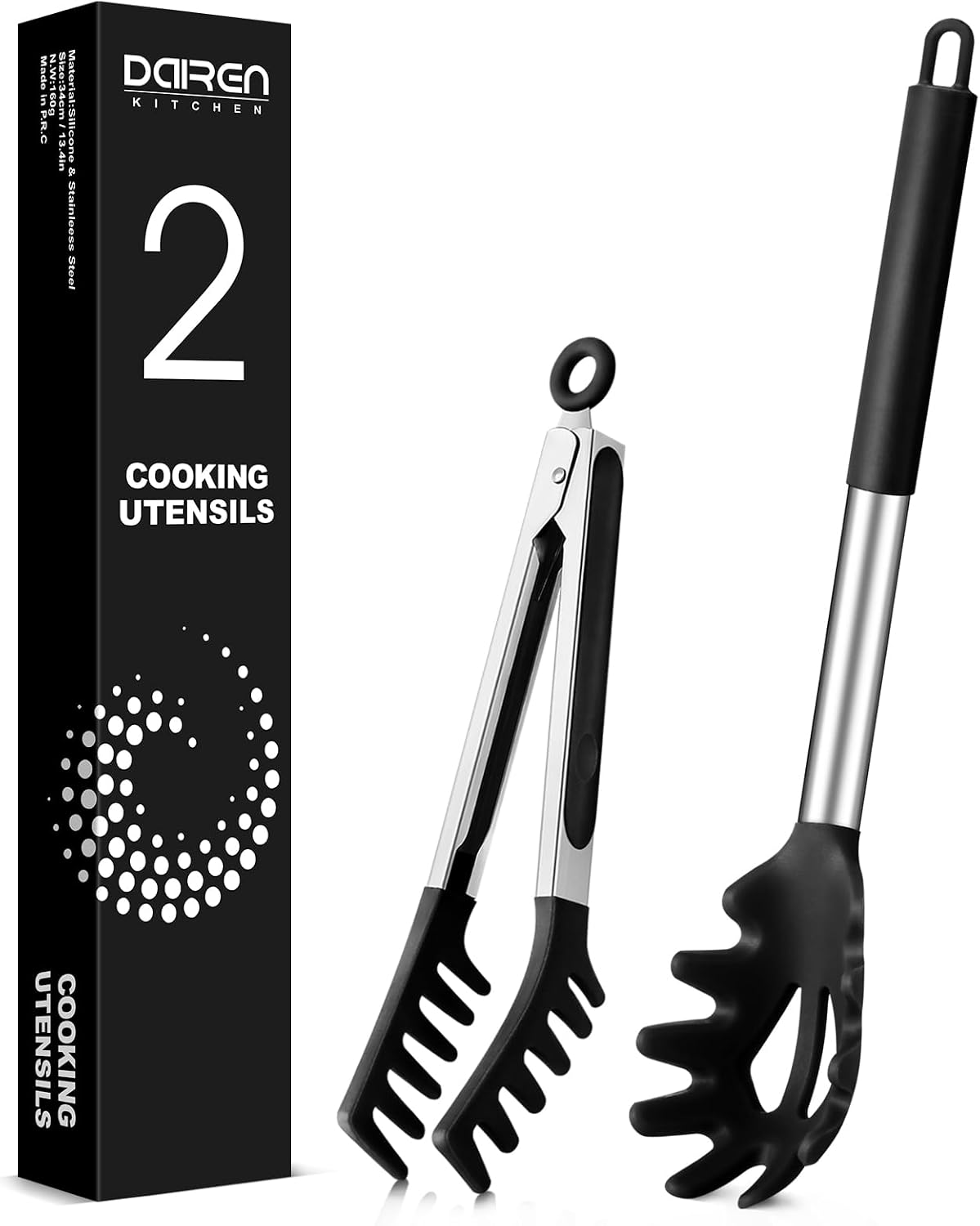
The board sets here are the multi-board type that makes separating raw meat from everything else straightforward. On our own shelf that range currently runs from $12.99 for the DaiRen Kitchen Black Spaghetti Spoon and Silicone Pasta Tong, 2-Pack up to $39.99 for the Neoflam Microban Antimicrobial Plastic Cutting Board Set – 3 Multicolor Boards.
Everything listed here is part of Kitchen Tools, which holds 2 products just now. These are the charged figures, and nothing is added between here and payment.
- DaiRen Kitchen Black Spaghetti Spoon and Silicone Pasta Tong, 2-Pack — $12.99
- Neoflam Microban Antimicrobial Plastic Cutting Board Set – 3 Multicolor Boards — $39.99
Related reading
Two other pieces on this site cover ground next to this one. Whisk shape determines what it is good at, and most kitchens own the wrong one for what they actually cook. And on a related note, equipment that works well at home fails in a busy kitchen for reasons that have little to do with quality.
- Whisks: balloon, flat and the one most people should own
- Kitting out a kitchen for volume rather than for one cook
Mistakes with board hygiene
Using the same board for raw meat and then for salad without washing is the significant one, and it is far more consequential than any material choice.
The other is keeping a board flat against a wet worktop. Both the board and the surface stay damp underneath, and a wooden board stored that way will cup and eventually split.
Resurfacing and replacing
A wooden board that has become scored can be sanded flat and re-oiled, which returns it to a hygienic surface and can be repeated many times over its life.
Plastic cannot be resurfaced usefully — sanding leaves a rough surface that holds more residue than the scoring did. Once a plastic board is deeply cut it should be replaced, which is the trade for its dishwasher convenience.
Size, weight and why boards slide
A board that slides while you cut is a genuine hazard, and it is usually because it is too light or the worktop is wet. A damp cloth underneath solves it instantly and costs nothing.
Weight also matters for stability under real chopping. A board substantial enough to stay put lets you work faster and more safely, which is why professional kitchens use heavy boards rather than thin ones.
Juice grooves and when they are worth having
A groove around the edge catches liquid from resting meat or juicy fruit, and on a board used for carving it genuinely prevents a mess on the worktop. It is a practical feature rather than a decorative one.
On a board used mostly for vegetables it reduces the usable surface for no benefit, and it is another feature to clean around. Choosing a grooved board for carving and a plain one for prep is the arrangement that makes sense.
A practical setup
Keep a dishwasher-safe plastic board for raw meat and a wooden one for everything else if you care about your knives. Replace or resurface anything deeply scored, and treat antimicrobial treatment as a bonus rather than a substitute for washing.
We supply from Glendale, CA: $6.50 carriage, free over $59, 30 days to return anything unused. Trade questions go to [email protected].