Why light silicone stains and whether it matters

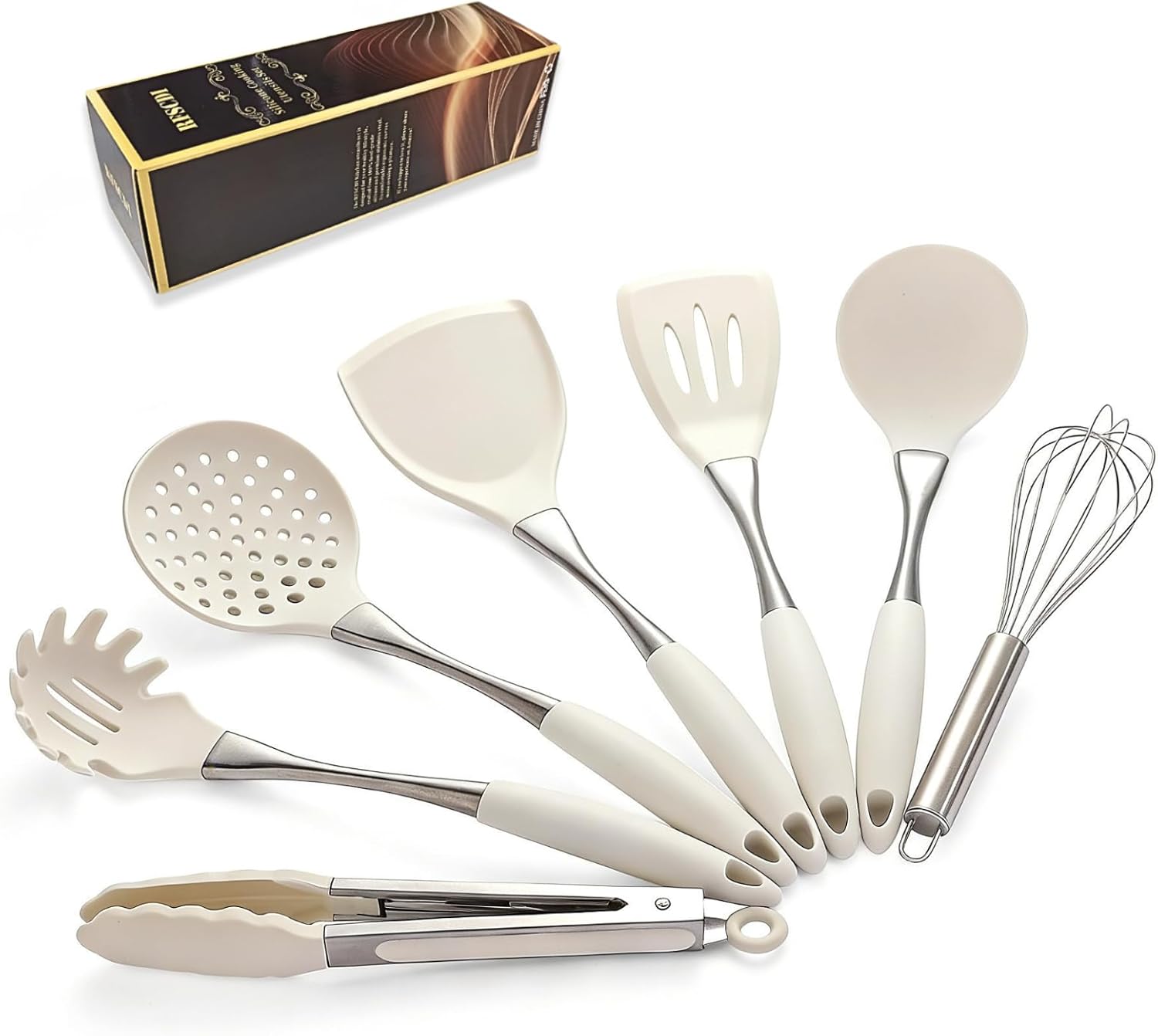
A pale silicone spatula used for a tomato sauce comes out orange, and no amount of ordinary washing changes it. This alarms people more than it should. The mechanism is well understood, the staining is cosmetic, and there are a couple of methods that shift most of it.
Oil-soluble pigments migrate into the surface
Silicone is slightly permeable to oils. Carotenoids in tomato and curcumin in turmeric are oil-soluble, so they travel a short way into the surface rather than sitting on it.
That is why surface washing does not remove them — by the time you wash, they are no longer on the surface.
It is cosmetic, not a hygiene issue
A stain is pigment within the material, not food residue on it. A properly washed stained utensil is clean.
Worth knowing before anybody throws away a perfectly serviceable set of spatulas over the colour.
Heat brings a lot of it back out
The same permeability works in reverse. A hot dishwasher cycle mobilises the oils and removes a noticeable amount of colour.
Repeating it over a few washes continues to lift it, which is why stains often fade over weeks without any special treatment.
Bicarbonate paste for the stubborn cases
A thick paste of bicarbonate of soda left on the stained area for several hours draws out a good deal more. Rinse well afterwards.
It is mildly abrasive as well, which helps with anything still sitting on the surface.
Sunlight is slow, free and effective
UV breaks down many of the pigments involved. A day in direct sun measurably lightens a stained utensil at no cost and no effort.
It works particularly well on turmeric, which is otherwise the most persistent of the common stains.
Prevention: rinse straight away, and consider darker tools
The longer a pigmented sauce sits on silicone, the further it migrates. Rinsing promptly limits it considerably.
If it genuinely bothers you, dark grey or black silicone avoids the issue entirely and performs identically.
Colours on this shelf
The silicone range here includes both pale and dark options, which is worth considering if staining is something you would rather not deal with. On our own shelf that range currently runs from $9.98 for the Cooking Tongs Set of 2: Stainless Steel with Black Silicone Tips, 7 & 9 Inch up to $29.99 for the Home Hero 41-Piece Stainless Steel Kitchen Utensil Set with Heat-Resistant Silicone.
Everything listed here is part of Kitchen Utensils, which holds 6 products just now. These are the charged figures, and nothing is added between here and payment.
- Cooking Tongs Set of 2: Stainless Steel with Black Silicone Tips, 7 & 9 Inch — $9.98
- Coukre 2-Pack PureBlack Silicone Spatulas for Cooking & Flipping, Heat Resistant — $9.99
- Beijiyi 3-Pack Silicone Spatula & Turner Set – Heat Resistant, BPA-Free — $15.28
- Miusco 5-Piece Non-Stick Silicone & Acacia Wood Utensil Set, Midnight Blue — $19.99
- RFSCDI White Silicone & Stainless Steel 6-Piece Cooking Utensil Set — $27.99
- Home Hero 41-Piece Stainless Steel Kitchen Utensil Set with Heat-Resistant Silicone — $29.99
Related reading
Two other pieces on this site cover ground next to this one. Both plastic and wood can be used safely, and the deciding factors are usually knife wear and how you wash them. And on a related note, whisk shape determines what it is good at, and most kitchens own the wrong one for what they actually cook.
- Cutting boards: plastic, wood and what antimicrobial means
- Whisks: balloon, flat and the one most people should own
What will not remove a stain
Bleach is the common attempt and it is both ineffective and hard on the material. The pigment is within the surface rather than on it, so a surface oxidiser has little to work with.
Abrasive scrubbing is equally unhelpful for the same reason, and it roughens the silicone so it picks up residue more easily afterwards. Both approaches make the tool worse without making it lighter.
Choosing colours to avoid the issue
Dark grey, black and navy silicone simply do not show it. If staining bothers you, that is the straightforward answer and it costs nothing in performance.
For a professional kitchen there is a reason to prefer pale silicone anyway: it makes residue visible, so a tool that has not been cleaned properly is obvious. That visibility is worth more than the cosmetic staining costs.
Staining as a sign of something else
A utensil that stains far more readily than others in the same set is sometimes a sign of a rougher surface finish, which holds pigment and residue more easily.
Run a finger over it. If it feels noticeably less smooth than a comparable tool, that texture will keep collecting residue regardless of how it is washed, and it is a reasonable reason to replace that particular piece.
What to do about it
Rinse promptly, run a hot dishwasher cycle, use bicarbonate paste on anything stubborn and put it in the sun for a day. And remember it is colour rather than contamination — a stained spatula is still a clean spatula.
We supply from Glendale, CA: $6.50 carriage, free over $59, 30 days to return anything unused. Trade questions go to [email protected].