Kitting out a kitchen for volume rather than for one cook

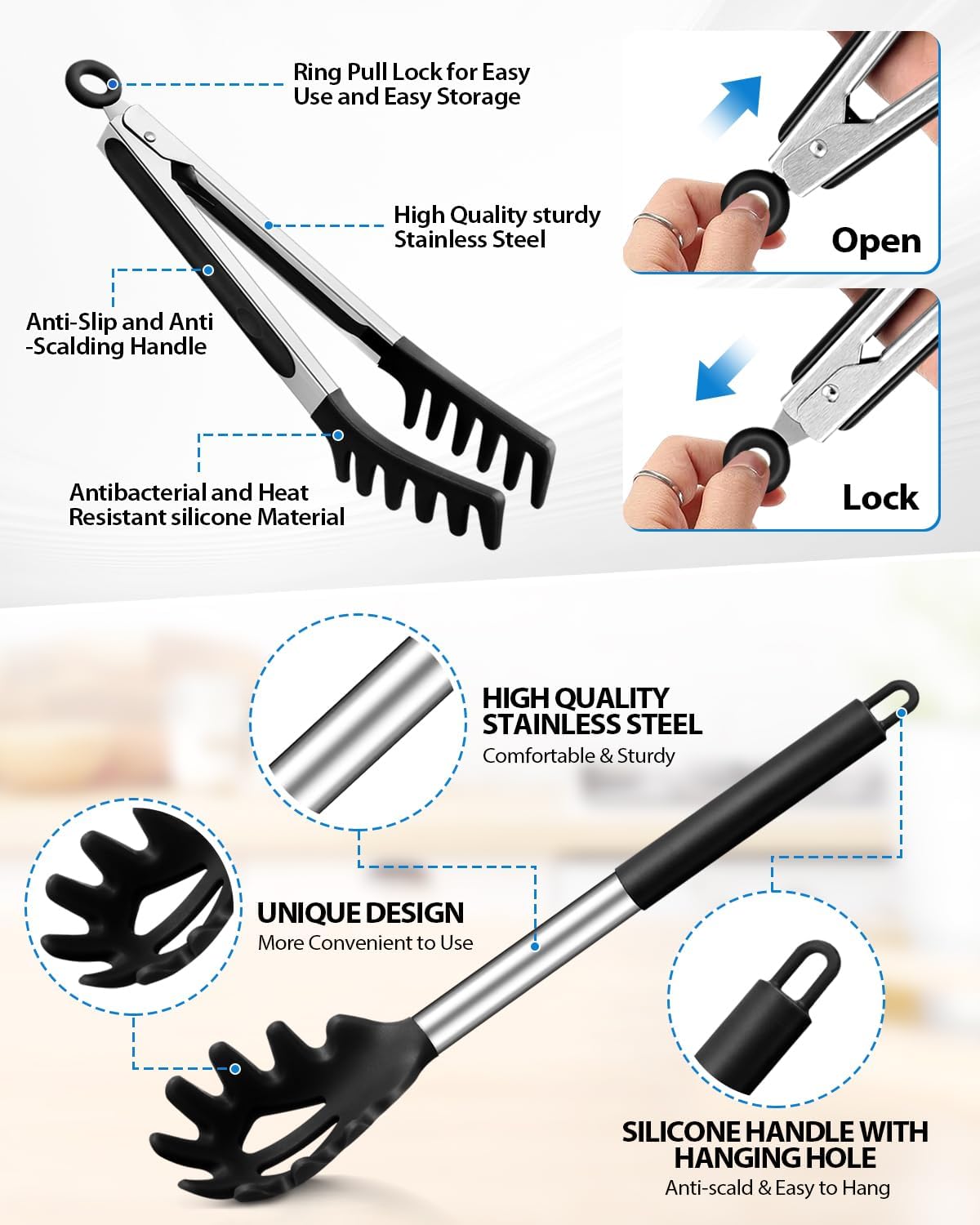
Kitchens that produce at volume have different priorities from home kitchens, and the difference is not simply that everything must be tougher. Replaceability, standardisation and how quickly things can be cleaned all matter more, and they change what is worth buying.
Standardise, so that anything can replace anything
A drawer of matching tools means anybody can pick up any one and it behaves as expected, and a failure is replaced from stock rather than being a problem.
Variety is pleasant at home and a liability at volume, where consistency is what keeps service moving.
Buy in multiples of what is in use
Whatever is in use should have a counterpart being washed. One of anything creates a bottleneck the moment it needs cleaning mid-service.
This is why trade quantities exist. It is a workflow requirement rather than a discount.
Prefer things that survive a commercial dishwasher
Commercial machines run hotter and faster than domestic ones. Anything that cannot go through comes out of the cleaning cycle and becomes a hand-washing job somebody has to do.
That is why silicone and stainless dominate professional kitchens and wood is confined to specific uses.
One-piece construction beats assemblies
Any joint between handle and head traps residue and eventually loosens. Moulded one-piece tools clean faster and last longer under heavy use.
It is also one fewer place for a cleaning inspection to find a problem.
Replaceable is better than repairable
At volume, the cost of a tool is small relative to the cost of the time spent dealing with it. Something cheap enough to replace on failure beats something that has to be maintained.
That is a different calculation from a home kitchen, where maintaining a good tool for years makes complete sense.
Colour coding is a working system, not decoration
Different colours for different tasks — raw, cooked, allergen — makes the correct behaviour the obvious one under pressure, which is when mistakes actually happen.
It is one of the cheapest and most effective controls available in a busy kitchen.
Trade quantities here
Most lines on this shelf are stocked in multiples, and larger quantities can be arranged directly for a kitchen buying to a specification. On our own shelf that range currently runs from $12.99 for the DaiRen Kitchen Black Spaghetti Spoon and Silicone Pasta Tong, 2-Pack up to $39.99 for the Neoflam Microban Antimicrobial Plastic Cutting Board Set – 3 Multicolor Boards.
Everything listed here is part of Kitchen Tools, which holds 2 products just now. These are the charged figures, and nothing is added between here and payment.
- DaiRen Kitchen Black Spaghetti Spoon and Silicone Pasta Tong, 2-Pack — $12.99
- Neoflam Microban Antimicrobial Plastic Cutting Board Set – 3 Multicolor Boards — $39.99
Related reading
Two other pieces on this site cover ground next to this one. A heat rating is a ceiling for sustained contact, not a temperature the tool is designed to work at. And on a related note, most nonstick pans are killed by heat rather than by scratches, which is the opposite of what people expect.
Where equipment budgets get wasted
Buying a small number of premium items rather than an adequate number of good ones is the common error. In a volume kitchen, availability matters more than refinement, and one excellent spatula in the wash is worth nothing.
The other is failing to standardise. A drawer of mismatched tools slows everybody down and makes stock control impossible, because nothing has a defined replacement.
Building a replacement cycle
Equipment in a busy kitchen wears out on a predictable schedule, and treating replacement as an ongoing cost rather than an occasional crisis keeps standards steady.
A simple approach is to check a category each month and replace anything degraded, rather than waiting for something to fail in service. It costs the same over a year and removes the disruption entirely.
Training and why standardisation helps it
A kitchen where every tool is the same is a kitchen where a new member of staff has less to learn. Standardisation is partly an equipment decision and largely a training one.
It also makes problems visible. When everybody uses the same turner, a batch that fails early is obvious immediately, whereas a drawer of mismatched tools hides that pattern entirely.
Storage that survives a busy service
Equipment stored where it is used gets put back; equipment stored across the kitchen ends up in a pile by the sink. Siting storage at the station that uses it is what keeps a kitchen tidy under pressure.
Open racks and wall rails work better than drawers in volume kitchens, because they dry properly, they make a missing item obvious at a glance, and nobody has to rummage through a drawer with wet hands mid-service.
The buying principles
Standardise on a small number of items, hold enough that something is always available while another is being washed, choose one-piece construction that goes through the machine, and use colour to make the right choice automatic.
We supply from Glendale, CA: $6.50 carriage, free over $59, 30 days to return anything unused. Trade questions go to [email protected].